
#Actualités du secteur
UHP 316L Stainless Steel Ball Valves for Semiconductor Gas Systems
UHP 316L Stainless Steel Ball Valves for Semiconductor Gas Systems
Ultra-high-purity gas delivery is one of the most critical requirements in semiconductor manufacturing. As wafer geometries continue to shrink and advanced processes such as chemical vapor deposition (CVD), atomic layer deposition (ALD), plasma etching, ion implantation, and cleaning become increasingly sophisticated, the gas delivery system must maintain extremely high levels of cleanliness, leak tightness, and process stability.
Within these systems, valves are essential components for controlling, isolating, and distributing process gases. A valve with inadequate material quality, poor surface finish, or insufficient sealing performance can introduce particles, moisture, oxygen, or other contaminants into the gas stream. These contaminants can affect process uniformity, reduce wafer yield, and increase equipment downtime.
vannes à bille en acier inoxydable UHP 316L are widely used in semiconductor gas systems because they combine corrosion resistance, mechanical strength, compact construction, reliable shutoff performance, and compatibility with ultra-high-purity applications. When properly manufactured and finished, they can provide dependable gas control in demanding semiconductor fabrication environments.
What Is a UHP 316L Stainless Steel Ball Valve?
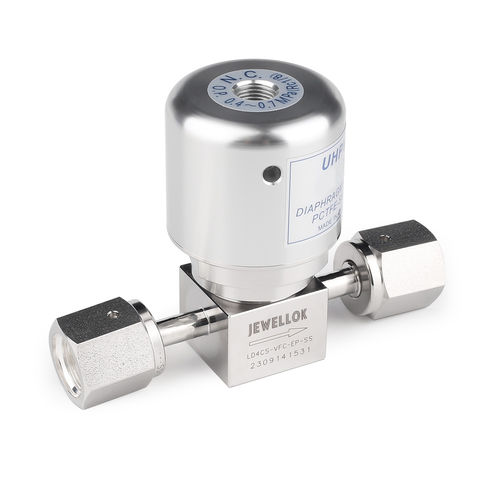
A UHP 316L stainless steel ball valve is a precision flow-control device designed for ultra-high-purity gas applications. Its primary operating element is a spherical ball containing a precision-machined passage. When the ball rotates to align the passage with the gas flow path, the valve opens. Rotating the ball approximately 90 degrees moves the passage perpendicular to the flow path and shuts off the gas.
The basic construction typically includes:
Corps en acier inoxydable 316L
Precision-machined ball
Stem and stem sealing components
Seat materials
End connections
Actuation or manual handle
High-integrity sealing structures
For semiconductor applications, however, simply using a conventional stainless steel ball valve is not sufficient. UHP valves must be manufactured according to stringent cleanliness and dimensional requirements. Internal surfaces need to be carefully controlled to minimize particle generation, adsorption, and contamination.
The valve’s internal geometry is also important. Dead legs, cavities, and areas where moisture or process gases can accumulate should be minimized because they can compromise gas purity and make system purging more difficult.
Why 316L Stainless Steel Is Preferred
316L stainless steel is one of the most commonly selected materials for semiconductor gas distribution components. Its low-carbon composition provides good corrosion resistance and helps reduce the risk of sensitization during manufacturing and welding.
The material offers several advantages for UHP gas systems.
Excellent Corrosion Resistance
Semiconductor processes may use corrosive or reactive gases. Depending on the application, gas systems can handle chemicals such as chlorine-containing gases, hydrogen chloride, hydrogen bromide, fluorine-containing gases, ammonia, and other process gases.
316L stainless steel provides strong resistance to many corrosive environments, although material compatibility must always be evaluated against the specific gas, concentration, pressure, temperature, and operating conditions.
High Mechanical Strength
Gas delivery systems can operate under relatively high pressures, particularly on the source side of the system. A 316L stainless steel valve can provide the mechanical strength required for demanding pressure-control and isolation applications when correctly designed and rated.
Good Cleanliness Characteristics
Properly processed 316L stainless steel has a smooth, stable surface that can be finished to meet stringent semiconductor cleanliness requirements. Electropolishing and other controlled surface-treatment processes can further improve internal surface quality.
Long-Term Reliability
A high-quality 316L construction can provide excellent durability in semiconductor gas distribution systems. This is particularly important because unplanned valve failure can interrupt process tools and create significant production losses.
The Importance of Ultra-High-Purity Surface Finishing
Material selection is only one part of UHP valve performance. The internal surface condition can be equally important.
Standard industrial stainless steel components may contain machining marks, microscopic burrs, embedded particles, or surface irregularities. These characteristics may be unacceptable for high-purity semiconductor gas service.
UHP ball valves may therefore undergo controlled cleaning and surface-finishing processes designed to improve internal cleanliness.
One important process is electropolishing. Electropolishing removes a controlled amount of material from the metal surface and can produce a smoother, more uniform finish. The resulting surface may reduce sites where contaminants or particles can accumulate.
Depending on the application and manufacturer, additional processes may include precision machining, ultrasonic cleaning, chemical cleaning, passivation, high-purity rinsing, drying, and controlled packaging.
The final objective is to ensure that the valve does not become a contamination source within the gas delivery system.
Leak Tightness in Semiconductor Gas Systems
Leak prevention is another major consideration when selecting a UHP ball valve.
A gas leak can create several problems. First, the loss of process gas can affect flow stability and process conditions. Second, external air or moisture can potentially enter the system if the system pressure drops below ambient pressure. Third, some semiconductor gases can pose significant safety risks if released into the surrounding environment.
Therefore, valve sealing performance must be evaluated carefully.
Important areas include:
Valve body connections
Stem seals
Ball-to-seat sealing
End connections
Welded joints
Actuator interfaces
High-quality UHP valves are typically subjected to leak testing during manufacturing. Depending on the application, helium leak testing can be used to verify very low leakage rates.
For semiconductor gas applications, the required leakage specification should be selected according to the system design, gas characteristics, pressure, applicable standards, and customer requirements rather than assuming that one leakage specification fits every installation.
VCR and Other UHP Connections
The connection type is an important consideration when integrating a ball valve into a semiconductor gas panel or gas distribution system.
connexions magnétoscope are widely used in high-purity gas systems because they can provide reliable metal-to-metal sealing when properly assembled. A typical VCR connection uses a gasket between precisely machined sealing surfaces. Correct installation is essential for maintaining system integrity.
Other connection configurations may also be used depending on the equipment design, including tube ends, butt-weld ends, face-seal configurations, and other specialized UHP connections.
When selecting a valve, engineers should consider:
Existing tubing dimensions
Connection standard
Gas pressure
Gas compatibility
Installation space
Required maintenance frequency
Cleaning requirements
Applicable industry standards
A valve with excellent internal performance will not provide the desired system reliability if its connection design is incompatible with the surrounding gas infrastructure.
Ball Valve vs. Other Valve Types
Ball valves are not the only valve technology used in semiconductor gas systems. Diaphragm valves, needle valves, check valves, regulators, and pneumatic valves all have specific applications.
The major advantage of a ball valve is its relatively simple quarter-turn operating mechanism. A 90-degree rotation can quickly move the valve between open and closed positions.
This makes ball valves particularly useful for:
Gas isolation
Equipment shutoff
Gas line switching
Consignation de maintenance
Purge-line control
Gas panel applications
Distribution systems
By comparison, diaphragm valves are often preferred where extremely high purity, minimal dead volume, and excellent isolation are priorities in critical process-gas applications.
Needle valves are generally more suitable when precise manual flow adjustment is required.
Consequently, selecting between a ball valve and another valve type should be based on the actual function of the valve within the gas system rather than simply choosing the most commonly used product.
Applications in Semiconductor Manufacturing
UHP 316L stainless steel ball valves can be integrated into many areas of semiconductor gas infrastructure.
Gas Cabinets
Gas cabinets provide controlled storage, regulation, and distribution of process gases. Ball valves can be used as isolation components within these systems.
Gas Panels
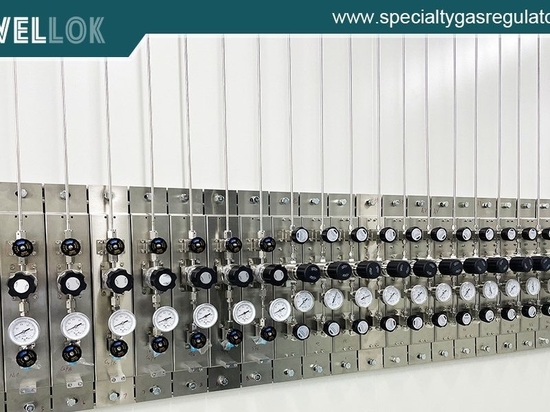
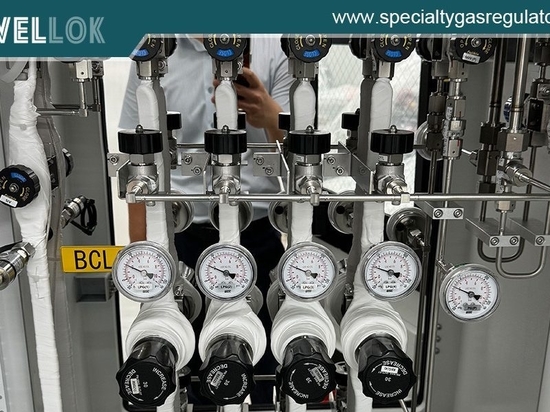
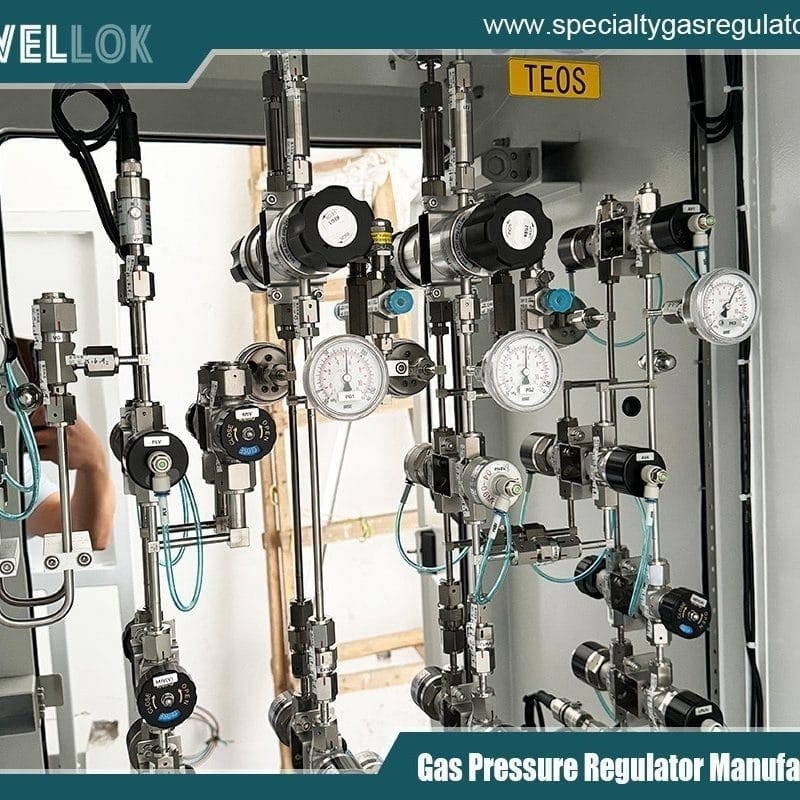
Gas panels contain regulators, valves, filters, pressure sensors, and other components used to control gas delivery to process tools. Compact UHP ball valves can provide reliable isolation and routing.
Gas Distribution Systems
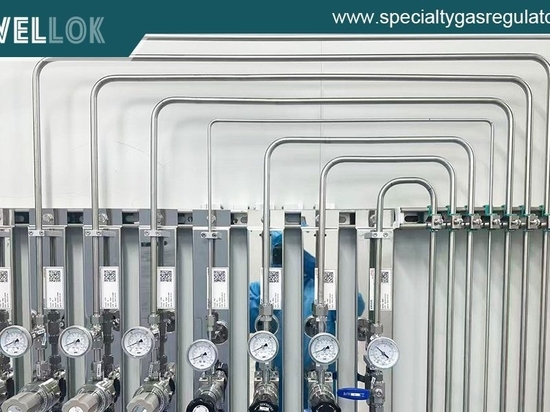
From the gas source to the process tool, semiconductor facilities require extensive networks of high-purity tubing. Valves are installed at strategic locations to isolate sections of the system and support maintenance.
Purge Systems
Purge gases are used to remove residual process gases and contaminants from selected portions of a gas delivery system. Ball valves can be used to control purge flow paths.
CVD and ALD Systems
CVD and ALD processes require highly controlled gas delivery. Even small variations in gas composition or flow can influence film properties. Reliable valve operation contributes to stable process conditions.
Etching Systems
Plasma etching processes can involve highly reactive and corrosive gases. The valve materials and sealing components must therefore be selected according to the specific process chemistry.
Key Selection Factors
Choosing the right UHP ball valve requires more than checking the nominal pipe size. Engineers should evaluate the complete operating environment.
1. Gas Compatibility
The valve’s body, ball, seats, seals, and other wetted materials must be compatible with the process gas.
2. Pressure Rating
The valve should have an appropriate pressure rating for both normal operating conditions and relevant system scenarios.
3. Temperature Range
Temperature can affect metal components, polymeric seals, lubricants, and other internal materials. The complete valve assembly should be suitable for the intended temperature range.
4. Internal Surface Finish
Surface roughness and finishing processes can have a direct impact on cleanliness and contamination control.
5. Leakage Performance
The required internal and external leakage rates should be clearly defined before selecting the valve.
6. Connection Type
The connection should match the tubing and equipment used throughout the semiconductor gas system.
7. Valve Size
Oversized valves can increase system volume and cost, while undersized valves may create excessive pressure drop. Valve sizing should therefore be based on actual flow requirements.
8. Actuation
Manual ball valves may be suitable for local isolation. Pneumatic or automated valves can be preferable for systems requiring remote operation, interlocks, or automated process control.
Manufacturing Quality Matters
For UHP semiconductor applications, the manufacturing process can be as important as the valve’s basic design.
A qualified manufacturer should have appropriate controls covering raw-material traceability, precision machining, cleaning, assembly, testing, inspection, and packaging.
Particular attention should be given to contamination control during final assembly. After high-purity cleaning, components should be protected from particles, oil, moisture, and other contaminants.
Packaging is also important. A valve that has been thoroughly cleaned but subsequently exposed to an uncontrolled environment may no longer meet the intended cleanliness requirements.
For this reason, UHP valves are commonly packaged using controlled procedures designed to protect the internal flow path until installation.
How to Improve Gas System Reliability
A reliable semiconductor gas system depends on the performance of the entire system rather than one component.
Engineers should establish clear specifications before purchasing UHP ball valves. These specifications can include material grade, surface treatment, connection type, pressure rating, temperature range, leakage requirements, cleanliness requirements, actuation method, and testing requirements.
Installation quality is equally important. Operators should follow the manufacturer’s installation instructions and use appropriate tools and procedures for high-purity connections.
After installation, the system may require pressure testing, leak testing, purging, and other verification procedures before being placed into service.
Routine inspection can also help identify abnormal valve operation, connection problems, actuator issues, or other potential failures before they affect production.
régulateur semi-conducteur ultra haute pureté monobétage optimal
Conclusion
vannes à bille en acier inoxydable UHP 316L are important components in modern semiconductor gas delivery systems. Their combination of corrosion resistance, mechanical strength, compact quarter-turn operation, and compatibility with high-purity manufacturing environments makes them suitable for gas cabinets, gas panels, distribution lines, purge systems, and semiconductor process equipment.
However, selecting a valve solely because it is made from 316L stainless steel is not enough. True UHP performance depends on the complete product—from raw material and precision machining to surface finishing, cleaning, assembly, leak testing, packaging, and installation.
For advanced semiconductor manufacturing, the right valve should be selected according to gas chemistry, pressure, temperature, flow requirements, connection configuration, cleanliness targets, and required leakage performance.
By combining high-quality 316L stainless steel, precision manufacturing, controlled UHP cleaning, reliable sealing technology, and appropriate testing procedures, semiconductor manufacturers can build gas delivery systems that provide greater process stability, contamination control, and long-term operational reliability.
For more about UHP 316L stainless steel ball valves for semiconductor gas systems, you can pay a visit to Jewellok at https://www.jewellok.com/ Pour plus d'informations.